
Attending group events and mixers can sometimes feel a bit daunting, right? You might wonder how to actually connect with people and make it worthwhile. Well, it doesn’t have to be a struggle. This guide is all about showing you How to Make the Most of Mixers turning those potentially awkward moments into opportunities for real connection and growth. We’ll cover everything from getting ready beforehand to keeping those new connections alive afterward.
Key Takeaways
- Understand why you’re going to an event – is it for making business contacts, learning something new, or just meeting people?
- Get ready before you even show up. Think about who you want to meet and what you want to talk about. Have your business cards handy!
- Don’t be afraid to start conversations. A simple hello, a compliment, or a question about the event can get things rolling.
- Pay attention to how people are reacting. If a conversation is winding down, know how to politely move on to the next person.
- Follow up after the event. A quick email or message within a day or two can turn a brief chat into a lasting connection.
Understanding The Purpose Of Group Events
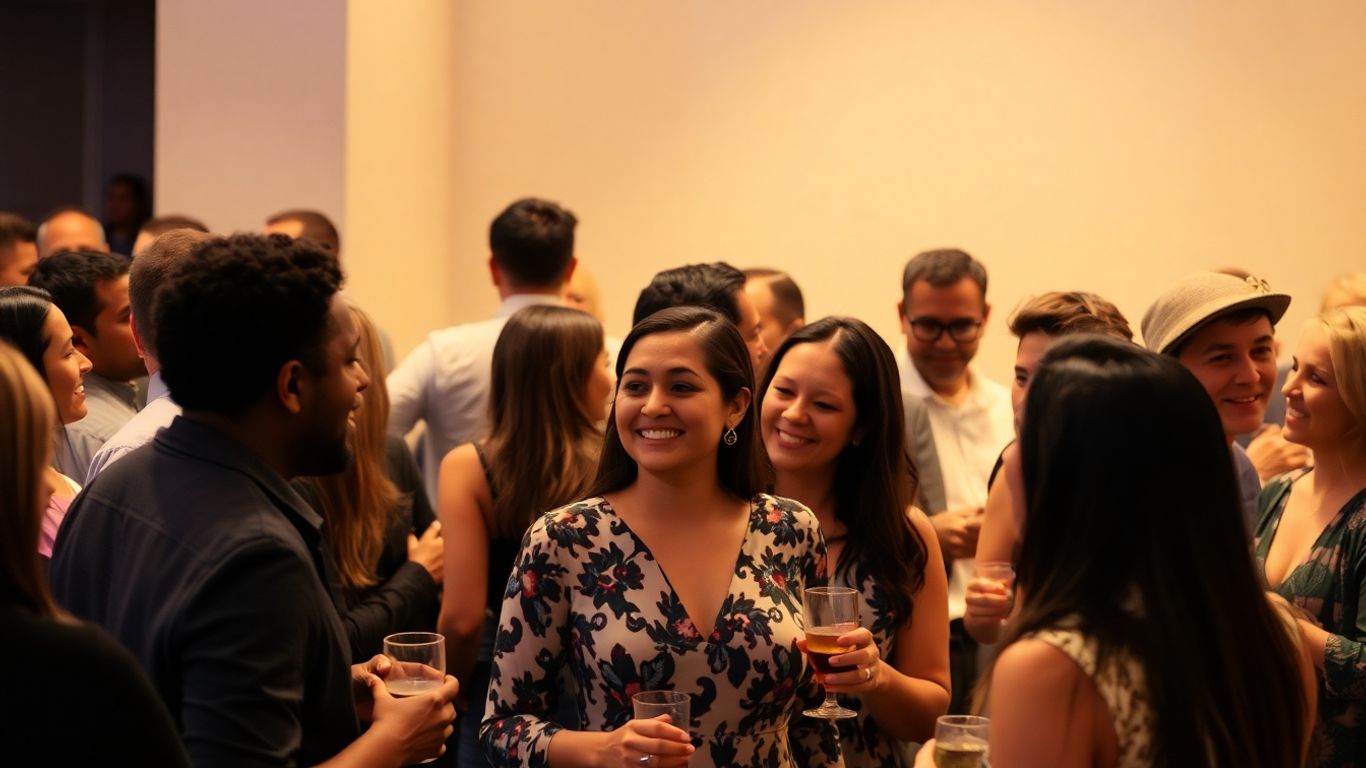
So, you’re heading to a group event or a mixer. Maybe it’s a big industry conference, a local meetup, or even just a casual get-together. It’s easy to think of these as just places to grab a drink and kill some time, but there’s usually a lot more going on under the surface. These events are carefully planned opportunities, and knowing why they exist is half the battle.
The Benefits of Mingling
Think about it: people are choosing to spend their evening or weekend at this event instead of doing a million other things. They could be watching a movie, grabbing dinner with friends, or playing sports. So, the event itself needs to offer something worthwhile. Mingling, or just chatting with people, is often the main draw. It’s where you can bump into someone new, catch up with familiar faces, and maybe even spark an idea you wouldn’t have thought of on your own. It’s about more than just passing the time; it’s about creating connections.
Networking Versus Socializing
It’s a common mix-up, but networking and socializing aren’t quite the same thing, though they often happen together at these events. Socializing is about enjoying yourself, having fun, and building general rapport. Networking, on the other hand, is more focused. It’s about building professional relationships that could potentially help your career or business down the line. You might meet someone at a mixer who becomes a client, a collaborator, or even a future employer. The goal is to build a web of connections, not just to have a good time. Of course, you can do both at once, but being clear on your primary objective helps you make the most of your time.
Identifying Event Objectives
Every event has a reason for being. Some are designed purely for social connection, like a happy hour for a specific hobby group. Others are more structured, aiming to educate attendees with speakers or workshops, with networking as a secondary benefit. Then there are events focused on business development, where the main goal is to connect potential clients or partners. Knowing the event’s purpose helps you tailor your approach. For example, if it’s a conference with a specific theme, you’ll want to focus your conversations around that theme. If it’s a casual mixer, you might have more freedom to explore different topics.
Here’s a quick look at common event goals:
- Community Building: Bringing like-minded people together regularly.
- Knowledge Sharing: Educating attendees through talks or panels.
- Business Development: Facilitating connections for sales or partnerships.
- Recruitment: Connecting employers with potential hires.
- Social Connection: Providing a relaxed space for people to meet.
Understanding the underlying purpose of an event helps you set realistic expectations and focus your efforts. It’s like knowing the rules of a game before you start playing – it makes everything smoother and more productive.
Preparing For Success Before You Arrive
Walking into a group event or mixer without a plan can feel a bit like showing up to a party without knowing anyone – awkward and a little pointless. But a little bit of prep work beforehand can make a huge difference in how much you get out of the experience. It’s not about being overly rigid, but more about setting yourself up for genuine connection.
Setting Clear Intentions
Before you even leave your house, take a moment to think about what you actually want to achieve. Are you looking to meet people in a specific industry? Maybe you want to find a collaborator for a project you’re working on. Or perhaps your goal is simpler, like just making a couple of new acquaintances. Having a clear intention gives your presence a purpose. It helps you focus your energy and makes it easier to steer conversations in a direction that serves your objectives. Without one, you might just drift through the event without really connecting with anyone.
Researching Attendees And Themes
If you know who’s going to be there or what the event is about, do a quick scan. Check out the event’s website or social media pages. See if there’s a list of speakers or attendees you can look through. Knowing a bit about the people or the topics being discussed can give you a natural starting point for conversations. It’s not about being a know-it-all, but about having a few talking points ready. For instance, if the event is about sustainable living, you could jot down a question about a recent article you read on the topic.
Gathering Essential Networking Tools
Think of these as your conversation starters and memory aids. You don’t need to bring a whole briefcase, but a few key items can be really helpful.
- Business Cards or Digital Contact Info: Make it easy for people to connect with you later. Have a stack of cards ready or a QR code for your LinkedIn profile on your phone.
- A Small Notebook and Pen: You might hear something interesting or get an idea you want to remember. Jotting it down shows you’re engaged and helps you recall details for follow-up.
- A Few Conversation Starters: These could be related to the event’s theme, a current industry trend, or even a general interest question. Having a couple ready can banish those awkward silences.
Preparation isn’t about memorizing scripts; it’s about creating a comfortable framework so you can be more present and authentic when you meet new people. It reduces the pressure and allows your natural curiosity to take over.
By taking these simple steps before you arrive, you’ll feel more confident and ready to make the most of the opportunities that await you. It transforms an event from a potential source of anxiety into a productive and enjoyable experience.
Initiating Meaningful Conversations

Walking up to someone new can feel a bit like stepping onto a stage without a script. It’s totally normal to feel a little awkward at first. But honestly, most people at these events are in the same boat, looking for a friendly face and a good chat. The key is to make that first move feel less like an interrogation and more like a friendly hello.
Approaching Individuals And Groups
When you spot someone you’d like to talk to, a simple, genuine smile goes a long way. It’s like a universal signal that says, “Hey, I’m friendly!” If you’re thinking of joining a group that’s already chatting, don’t just barge in. Wait for a natural pause in their conversation. Then, a polite “Mind if I join you?” is usually all it takes. It shows respect for their existing chat and makes you seem approachable.
Using Icebreakers Effectively
Sometimes, you need a little something to get the ball rolling. A sincere compliment can work wonders. Maybe you like their tie, or you overheard something interesting they said earlier. It’s not about being overly flattering, just noticing something positive. Another good trick is to comment on the event itself – the food, the speaker, the atmosphere. It’s a shared experience, so it’s a natural starting point.
Here are a few ideas to get you started:
- “I really liked what the speaker said about [topic]. What were your thoughts on that?”
- “This is my first time at this event. Have you been before?”
- “That appetizer looks amazing! Have you tried it yet?”
Asking Engaging Questions
Once you’ve broken the ice, keep the conversation flowing by asking questions that invite more than a “yes” or “no” answer. Instead of asking, “Did you enjoy the presentation?” try something like, “What was your biggest takeaway from the presentation?” This encourages them to share more. It’s also great to share a little about yourself, too. Making it a two-way street helps build a connection.
Remember, people generally like talking about themselves and their experiences. By showing genuine interest and asking thoughtful, open-ended questions, you create an environment where others feel comfortable opening up. This is how you move beyond superficial chat and start building real rapport.
Here’s a quick look at question types:
| Question Type | Example |
|---|---|
| Open-Ended | “What brought you to this event today?” |
| Experience-Based | “What’s been the most interesting thing you’ve learned so far?” |
| Opinion-Seeking | “How do you see [event topic] impacting your industry in the next year?” |
| Connection-Focused | “Have you worked on any projects similar to what was discussed?” |
Navigating Social Dynamics
So, you’ve made it to the event, maybe even started a few chats. Now what? It’s about keeping those conversations going and knowing when to gracefully bow out. Think of it like a dance – there’s a rhythm to it, and reading the room is key.
Reading And Responding To Cues
People send signals all the time, even when they’re not saying much. Paying attention to body language is a big part of this. Are they leaning in, making eye contact, and nodding along? That’s usually a good sign they’re engaged. On the flip side, if someone’s arms are crossed, they’re checking their watch a lot, or their eyes keep darting around, they might be ready to move on. It’s not about being a mind reader, just being aware. If a conversation feels like it’s dragging or the other person seems distracted, it might be time to gently steer the topic or consider wrapping it up. Sometimes, a simple, “It was great talking with you about [topic], I should probably go say hello to a few other people,” works wonders.
Maintaining A Confident Demeanor
Confidence isn’t about being the loudest person in the room. It’s more about being comfortable in your own skin. Stand up straight, make eye contact (but don’t stare!), and speak clearly. Even if you’re feeling a bit nervous inside, projecting a calm and open attitude can make a huge difference. Remember, most people are focused on their own interactions and aren’t scrutinizing your every move. Try to focus on being genuinely interested in the other person rather than worrying about how you’re coming across. It’s okay to be a little awkward sometimes; it makes you human.
Gracefully Exiting Conversations
Knowing how to leave a conversation is just as important as knowing how to start one. You don’t want to just vanish, and you definitely don’t want to get stuck talking to someone for an hour when you’d rather be mingling. A polite exit can be as simple as saying, “It’s been a pleasure chatting with you. I need to go find my colleague/grab another drink/say hello to the host, but I hope we can connect again soon.” You can also use the environment to your advantage: “Excuse me, I just saw someone I’ve been meaning to catch up with.” The goal is to be polite and leave the door open for future interactions, not to shut it down completely. It’s a skill that gets easier with practice, and honestly, most people appreciate a clear, polite exit over being held captive in a conversation.
Maximizing Your Connections
So, you’ve had some good chats, maybe even exchanged a few business cards. Now what? The real work of making those connections stick starts now. It’s not just about meeting people; it’s about turning those brief encounters into something more substantial. Think of it like planting seeds – you need to water them to see them grow.
Building Rapport Beyond Small Talk
Moving past the weather and what you do for a living is key. Try to find common ground. Did you both mention a challenging project? A recent industry trend? Dig a little deeper. Ask open-ended questions that invite more than a one-word answer. Instead of ‘Do you like your job?’, try ‘What’s the most interesting part of your work right now?’ This shows you’re genuinely interested and not just going through the motions. Remember, people connect over shared experiences and genuine curiosity.
Identifying Opportunities For Collaboration
As you talk with people, keep an ear out for needs or challenges they mention. Maybe someone is looking for a specific skill you have, or perhaps you know someone who could help them. Don’t be afraid to play matchmaker. Offering a referral or an introduction can be incredibly powerful. It shows you’re thinking about them and how you can add value to their professional life. It’s not about selling yourself, but about seeing where your networks might overlap and create something new.
Cultivating Diverse Perspectives
Don’t just stick to talking with people who seem just like you or who are in the exact same role. Seek out individuals from different departments, industries, or backgrounds. They often have unique insights and ways of looking at problems that you might not have considered.
Here’s a quick way to think about it:
- Industry Differences: How do people in tech approach a problem versus someone in healthcare?
- Role Variations: What’s the perspective of a marketing person compared to an engineer on the same project?
- Experience Levels: Newcomers often have fresh ideas, while seasoned professionals bring wisdom.
Getting different viewpoints isn’t just about expanding your contact list; it’s about broadening your own understanding and becoming a more well-rounded professional. It can spark new ideas and solutions you wouldn’t have found otherwise.
The Art Of The Follow-Up
So, you’ve had a great time at the event, met some interesting people, and maybe even exchanged a few business cards. That’s awesome! But here’s the thing: the real magic doesn’t happen at the event itself. It happens after. Think of the event as planting seeds. The follow-up is the watering and tending that helps those seeds actually grow into something.
Timely Post-Event Outreach
Don’t wait too long. Seriously. The longer you wait, the colder the connection gets. Aim to reach out within 24 to 48 hours. This is when the conversation is still fresh in both your minds. A quick email or a LinkedIn message works wonders. It shows you were paying attention and that you’re genuinely interested in continuing the chat.
Here’s a simple timeline to keep in mind:
- Within 24 Hours: Send a brief thank-you email or LinkedIn message. Mention something specific you discussed to jog their memory.
- Within 48 Hours: If you promised to send more information or make an introduction, do it now.
- Within a Week: If you discussed a potential collaboration or a follow-up meeting, suggest a specific time or action.
Personalizing Your Communication
This is where you move from being just another contact to someone memorable. Generic messages get ignored. Take a moment to recall what you talked about. Did you discuss a particular book, a shared hobby, or a challenge in your industry? Weave that into your message.
Instead of:
“Hi [Name], it was nice meeting you at the event.”
Try something like:
“Hi [Name], it was great chatting with you at the [Event Name] yesterday! I really enjoyed hearing your thoughts on [Specific Topic Discussed]. I’ve been meaning to check out that book you recommended – I’ll let you know what I think!”
It shows you listened and remembered. That personal touch makes a huge difference.
Nurturing New Relationships
Meeting someone is just the first step. Building a relationship takes time and consistent effort. Think about how you can add value to your new connections. Share an article you think they’d find interesting, congratulate them on a professional achievement, or simply check in to see how things are going.
Building a strong network isn’t about collecting the most business cards; it’s about cultivating genuine connections that can support and inspire you over time. It requires consistent, thoughtful engagement beyond the initial meeting.
Don’t be afraid to suggest a casual coffee or a quick virtual chat if it feels appropriate. The goal is to keep the lines of communication open and let the relationship develop naturally. Remember, every interaction is an opportunity to strengthen your professional circle.
Wrapping It Up
So, there you have it. Making the most out of group events and mixers isn’t some big mystery. It’s really about showing up prepared, being yourself, and actually talking to people. Remember to set a small goal for yourself before you go, like chatting with a few new faces. Don’t overthink it; most people are just as keen to connect as you are. And hey, if you meet someone interesting, a quick follow-up later can turn a brief chat into something more. It’s all about putting yourself out there, even if it feels a little awkward at first. You might be surprised at who you meet and what comes from it.
Frequently Asked Questions
What’s the main point of going to group events or mixers?
These events are great chances to meet new people, both for fun and for your career. You can learn new things, make friends, and sometimes even find business partners or job opportunities. It’s all about connecting with others and opening doors to new possibilities.
Is it okay to be a bit shy or nervous at these events?
Absolutely! Many people feel the same way. The key is to remember that most people are focused on their own experience, not judging you. With a little practice and by having a few conversation starters ready, you can feel more comfortable and even enjoy meeting new folks.
How do I start talking to someone new?
A simple smile and a friendly hello can go a long way. You can comment on the event itself, like the music or the food, or ask a light question about how they’re enjoying themselves. If you know something about the event’s theme, that’s a great topic to start with too!
What’s the difference between networking and just hanging out?
Networking is usually about building connections for your job or business, like finding clients or learning about your industry. Hanging out, or socializing, is more about making friends and having a good time without a specific work goal. But sometimes, the lines can blur, and a casual chat can lead to a great opportunity!
How do I know when it’s time to end a conversation?
It’s good to know when to move on. You can politely say something like, ‘It was great talking with you, I should go say hello to a few other people.’ Or, ‘I need to grab another drink, but it was nice meeting you!’ It’s all about being polite and making a smooth exit.
What should I do after the event is over?
Don’t forget to follow up! Sending a quick email or message within a day or two is a good idea. Mention something you talked about to remind them who you are. This helps turn a brief meeting into a lasting connection.